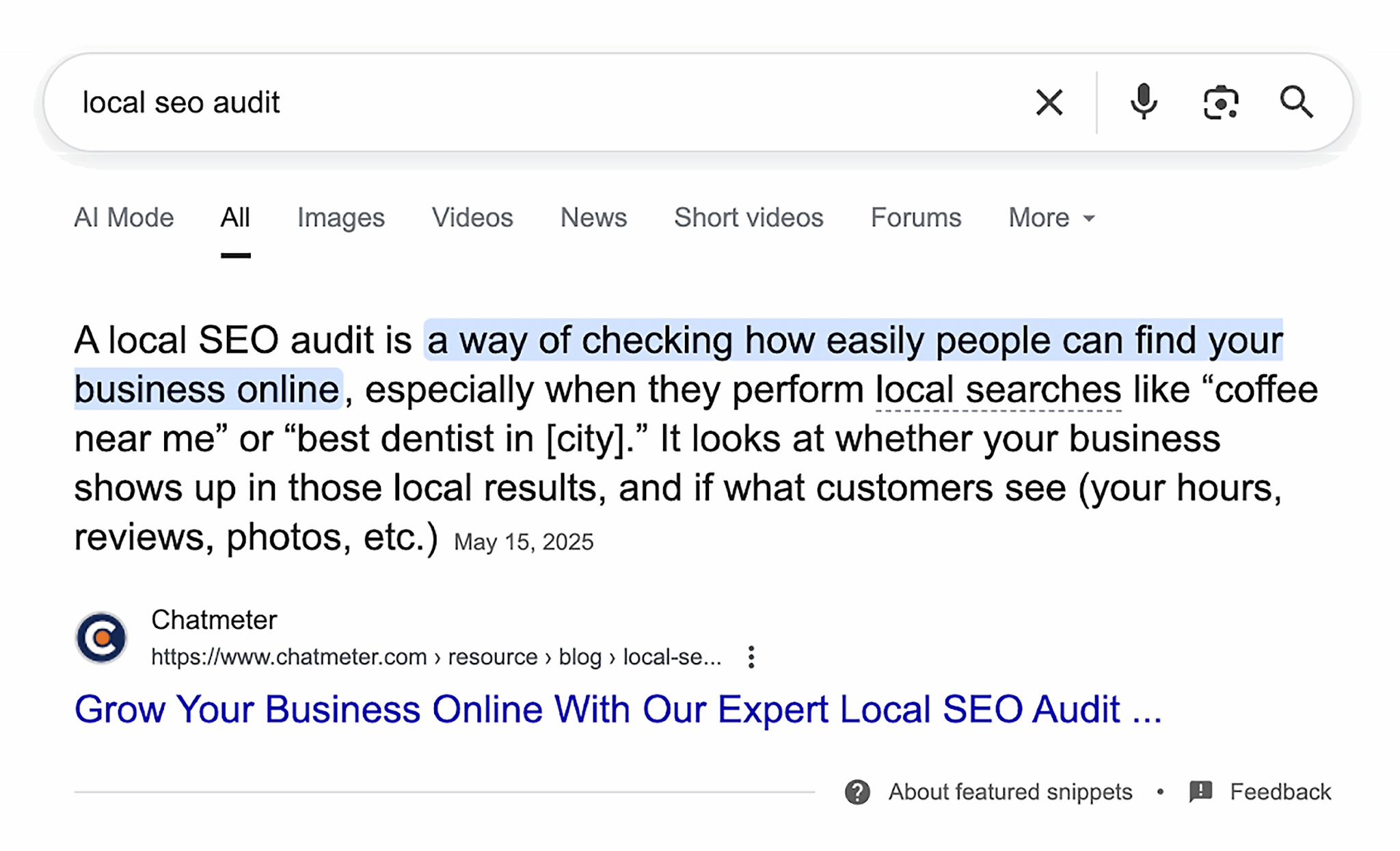
Imagine you are a tourist in Singapore. If you are asking, "What time does Gardens by the Bay close?" on the Internet, instead of clicking through to the official website, you will see a bolded text box showing "9:00 PM" along with a small map and a "Call" button. The user has everything they need in seconds. For the user, it’s a win for convenience. For the business, it means their "storefront" is now the search page itself, not just their website.
How the engine reads your mind
To make this happen, search engines use a process called "extraction." They scan millions of websites to find specific, factual data that can be pulled out and displayed as a standalone answer. They look for well-structured content—things like clear headings, price tables, or concise definitions.
If you ask Gemini, for example, "How do I renew my road tax in Malaysia?", it doesn't just give you a link to the JPJ website. It looks for a step-by-step guide on a reputable blog, summarises those steps into a clean list, and presents them to you. It understands that you aren't looking for a long article; you’re looking for a process. By providing that process instantly, the search engine keeps you in its own ecosystem while giving the original source credit through a small citation link.
Building authority without the click
Many businesses worry that if people don't click, they lose value. However, the reality is that visibility has become the new currency. When your brand provides the answer that a search engine chooses to feature, you are being hand-picked as the most trustworthy authority on that topic. So, it is okay. Even if a user doesn't visit your site today, they have seen your name associated with a helpful, accurate answer. This builds a mental bookmark. The next time that same user needs a more complex service, something that does require a click or a purchase, your brand is already the one they recognise and trust.
To be successful in 2026, as far as visibility is concerned, is about two things. One, the traffic volume you can capture. And two, the conversation volume you can own.